
E-E-A-T in SEO: What It Means, Google’s Guidelines & How to Improve It
Ever wondered why some websites consistently appear on Google while others struggle to get noticed, even with well-written content?
Keywords and backlinks matter, but Google also looks for signs that content is helpful, reliable and created by people who understand the subject.
That’s where E-E-A-T in SEO comes in.
Whether you’re a business owner, marketer or content creator, understanding E-E-A-T can help you create content that earns readers’ trust and aligns with Google’s approach to search quality.
What Is E-E-A-T in SEO?
E-E-A-T stands for Experience, Expertise, Authoritativeness and Trustworthiness. It’s a framework used in Google’s Search Quality Rater Guidelines to evaluate the quality and reliability of content.
Here’s what each element means:
| Element | What it means | Example |
|---|---|---|
| Experience | First-hand knowledge of a subject | A marketer sharing results from an actual campaign |
| Expertise | Knowledge or skills relevant to the topic | An SEO specialist explaining technical SEO |
| Authoritativeness | Recognition as a credible source | A website referenced by respected industry publications |
| Trustworthiness | Honest, accurate and reliable information | A business website with transparent details and verified claims |
Google considers trust the most important element. Experience, expertise and authority all contribute to making content trustworthy.
For example, imagine you’re researching how to improve your Google Ads performance.
Would you trust a generic article repeating basic tips, or one written by a performance marketer explaining actual campaign challenges, optimizations and results?
The second article offers something more valuable: experience you can learn from.
That’s the principle behind E-E-A-T.
Is E-E-A-T a Google Ranking Factor?
No, E-E-A-T is not a direct Google ranking factor or a numerical score.
Google uses multiple ranking signals to identify helpful, reliable content, including signals that may reflect aspects of E-E-A-T.
This means adding an author bio or an About Us page won’t automatically improve your rankings.
What matters is whether your website genuinely demonstrates credibility through useful content, relevant expertise and trustworthy information.
E-E-A-T is particularly important for topics Google calls Your Money or Your Life (YMYL), such as health, finance and safety, where inaccurate information could seriously affect people’s lives.
However, building trust matters for business websites, marketing blogs, e-commerce stores and other online content too.
Google E-E-A-T Guidelines: What Should Website Owners Know?
Google’s guidance on creating helpful, people-first content encourages website owners to focus on three important questions:
Who created the content?
Readers should be able to understand who wrote an article and why that person is qualified to discuss the topic.
How was the content created?
Where relevant, explain the research, testing, first-hand experience or tools involved in producing the content.
Why was the content created?
The primary purpose should be helping readers, not simply attracting search traffic.
Google’s guidance also emphasizes originality, accuracy, effort and genuine expertise.
For businesses, the takeaway is simple: don’t just publish content because a keyword has search volume. Publish something that genuinely answers the question behind that search.
How to Improve E-E-A-T on Your Website: 7 Practical Steps
You don’t need to completely redesign your website to start improving its credibility.
Here are seven practical improvements worth making.
1. Publish Content Based on Real Experience
Anyone can write a list of marketing tips. What makes your content different is what you’ve actually learned.
If you’re a digital marketing agency, consider sharing:
- Campaign challenges and how you addressed them.
- Before-and-after performance comparisons.
- Real examples of SEO or advertising improvements.
- Lessons learned from experiments that didn’t work.
For example, instead of simply saying “Optimize your landing pages to improve conversions,” explain which elements you tested, what changed and what you learned.
Original insights make content more useful than generic advice.
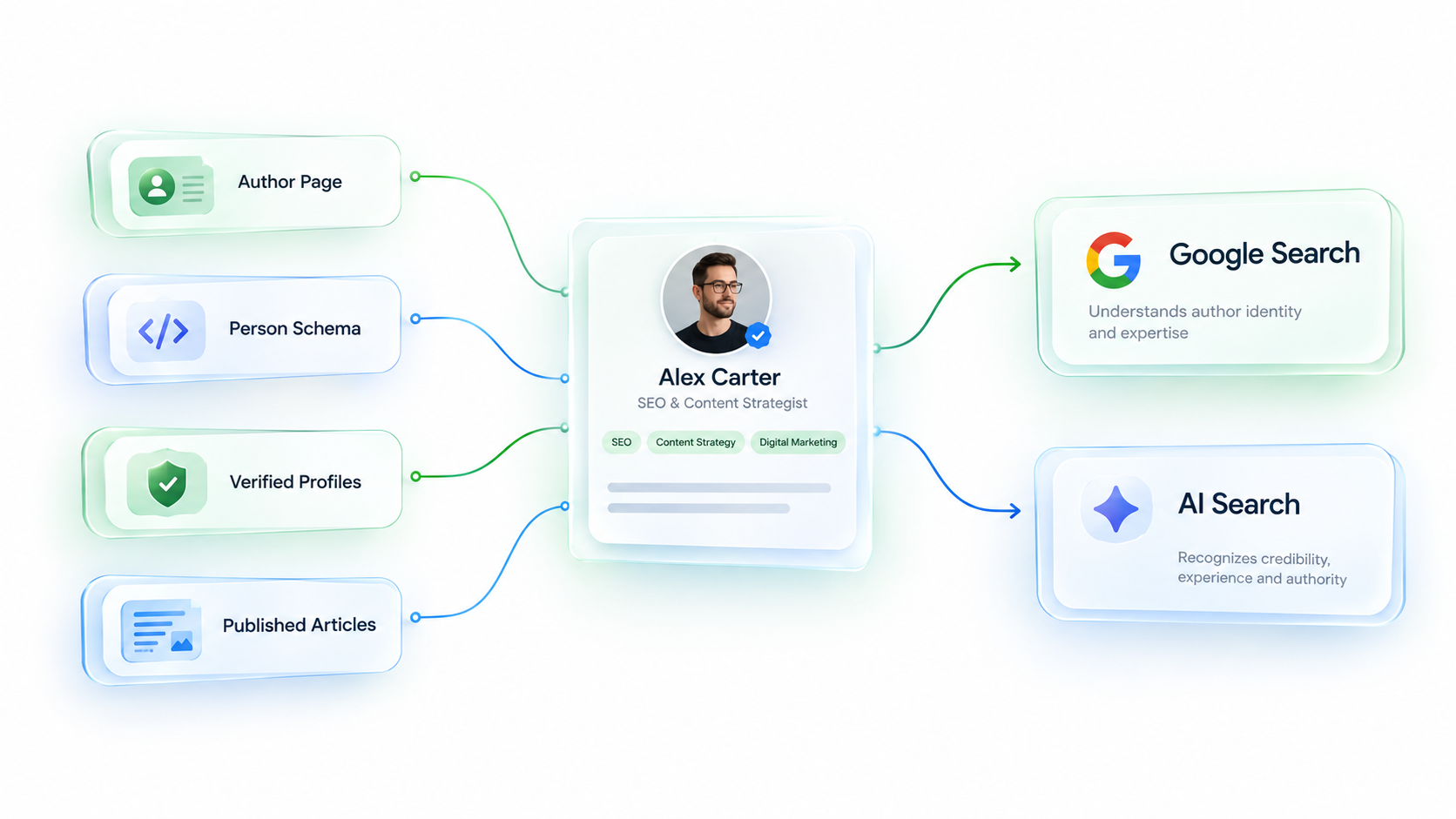
2. Show Who Is Behind Your Content
Readers should know who’s giving them advice.
Add a real author name, a short professional bio and a link to an author profile wherever appropriate.
A useful author bio might explain:
- The person’s role and relevant experience.
- The topics they specialize in.
- Relevant qualifications or verifiable achievements.
- Links to their professional profile or published work.
Avoid made-up credentials, misleading author identities or generic biographies that don’t establish relevant expertise.
3. Support Important Claims With Credible Sources
If your article includes statistics, industry findings or Google algorithm claims, show readers where the information came from.
For SEO-related topics, useful primary sources include Google Search Central and official Google documentation.
For marketing insights, use reputable industry research, clearly attributed data or your own verified findings.
A specific, properly sourced fact is more useful than an impressive statistic without evidence.
4. Build Trust Beyond Your Blog
Your blog isn’t the only place where visitors evaluate your business.
Make sure your website includes clear information about who you are, what you offer and how people can contact you.
Useful trust signals include an About Us page, genuine client testimonials, case studies, contact information, privacy policies and a secure website.
These elements help visitors feel confident about the business behind the content.
5. Keep Your Content Accurate and Updated
SEO recommendations, advertising platforms and digital marketing practices change regularly.
Review important articles periodically to ensure that examples, links and recommendations are still accurate.
If Google changes its guidance, update the relevant sections and explain what changed.
Avoid changing publication dates simply to make old content appear new.
6. Use Author Schema and Structured Data Correctly
Structured data helps search engines understand information about your pages.
For blog content, relevant markup may include Article or BlogPosting structured data with accurate author information.
You can also use profile page structured data where appropriate.
However, schema markup doesn’t prove expertise or guarantee better rankings. Think of it as a way to clarify information that already exists on your website.
7. Build Authority Through Consistent, Useful Content
Publishing one detailed article doesn’t automatically make your website an authority.
Build a collection of genuinely useful content around the topics your business understands best.
For example, a digital marketing agency might publish connected articles about SEO strategy, content optimization, Google Ads, analytics and AI search.
Link related articles together, avoid repeating the same information across multiple pages, and focus on answering different questions within your area of expertise.
Over time, a consistent body of helpful content can strengthen your website’s reputation and make it easier for readers to explore your expertise.
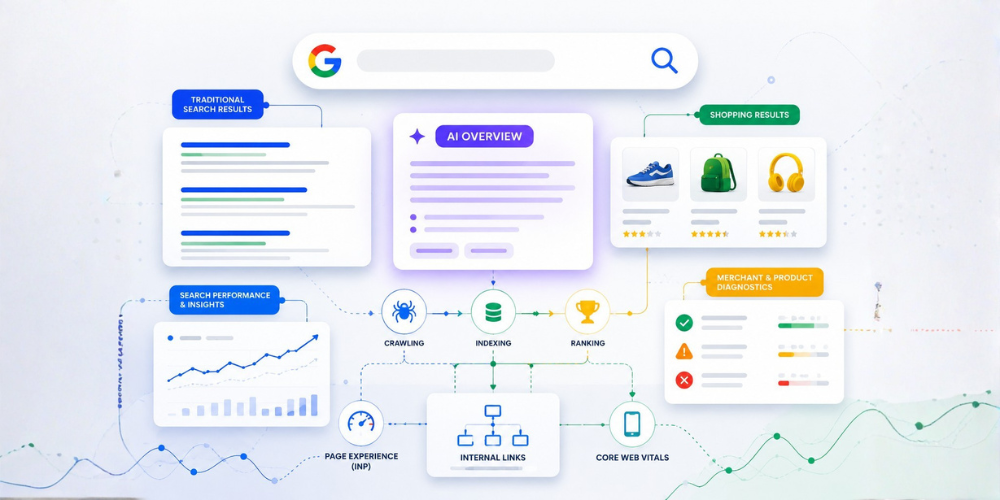
Does E-E-A-T Matter for AI Search and Google AI Overviews?
Yes, the principles behind E-E-A-T remain relevant as people increasingly use Google AI Overviews and AI assistants to find information.
Google says its AI search features build on its existing Search systems, and traditional SEO best practices continue to matter.
But there’s an important distinction: improving E-E-A-T does not guarantee that your website will be cited in an AI-generated answer.
If you want your content to be useful to readers and potentially referenced by AI search tools, focus on:
- Answering common questions clearly and directly.
- Publishing original examples, insights and evidence.
- Supporting factual claims with reliable sources.
- Making important content accessible to search engines.
- Using descriptive headings and logical article structure.
- Clearly identifying the people or organization responsible for the information.
For example, an article that explains what E-E-A-T is, gives a practical example and offers specific steps readers can follow provides more immediate value than a lengthy introduction filled with general statements.
The objective isn’t to write exclusively for AI. It’s to create information worth finding, reading and referencing.
E-E-A-T SEO Checklist
Before publishing or updating an article, ask yourself:
- Does the article answer the reader’s main question?
- Does it include relevant first-hand experience or original insight?
- Is the author or publishing organization clearly identified?
- Are important facts supported by credible sources?
- Is the content accurate and up to date?
- Can visitors easily find information about the business?
- Is the content easy to read, navigate and understand?
- Does it provide something useful beyond competing articles?
You don’t need a perfect score. Use these questions to identify where your content can become more helpful and trustworthy.
Frequently Asked Questions About E-E-A-T in SEO
E-E-A-T stands for Experience, Expertise, Authoritativeness and Trustworthiness. It describes qualities Google uses in its Search Quality Rater Guidelines to assess the reliability and usefulness of content.
Start by publishing accurate, experience-led content, identifying real authors, citing credible sources and making your business information transparent. Regularly update important pages and demonstrate expertise through useful examples.
No. Google states that E-E-A-T itself isn’t a specific ranking factor, although its ranking systems use multiple signals that can help identify content demonstrating these qualities.
An accurate author bio helps readers understand who’s responsible for the content and what experience they bring. Google encourages clear authorship information where readers would expect it, but adding a bio alone doesn’t guarantee higher rankings.
AI-assisted content can be useful when it is accurate, reviewed appropriately and provides genuine value. However, publishing large amounts of generic AI-generated content without meaningful oversight or originality is not a reliable SEO strategy.
Final Thoughts: Build Trust, Not Just Rankings
Good SEO isn’t just about getting people to click on your website. It’s about giving them a reason to trust what they find.
E-E-A-T encourages businesses to move beyond generic content and demonstrate real knowledge, experience and credibility.
Start with your most important pages. Improve their accuracy, add useful examples, make authorship clear and answer the questions your audience is actually asking.
At AdsLectic, we believe effective SEO should connect search visibility with meaningful business outcomes.
Want to make your website more visible, credible and useful to potential customers? Explore our SEO and digital marketing services at adslectic.com.