Running Facebook ads doesn’t require a massive budget. In fact, many small businesses see solid results spending under $20 per day — if the strategy is right.
If you’re a local business owner, coach, service provider, or small eCommerce brand, this guide will walk you through how to run Facebook ads on a low budget, without wasting money.
Let’s keep it simple, practical, and real.
Can You Really Run Facebook Ads with $20/Day?
Yes — but you can’t run them randomly.
When your Facebook ads budget for small business is limited, you need:
- Clear objective
- One focused audience
- Strong creative
- Simple funnel
Low budget doesn’t mean low results. It just means you need precision.
Step 1: Choose the Right Campaign Objective
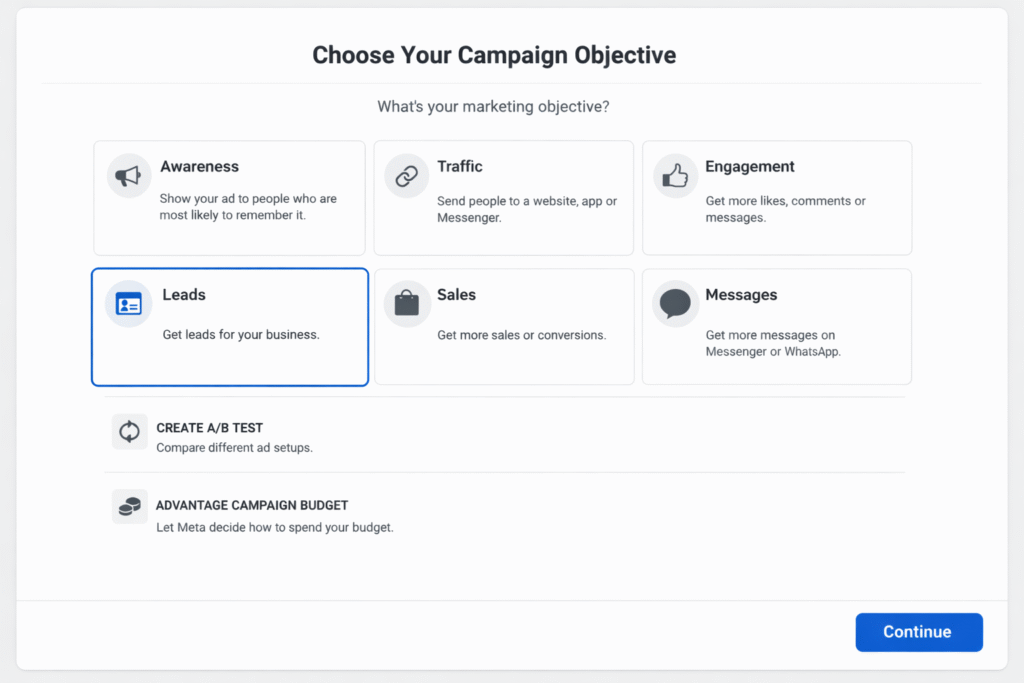
Inside Meta Platforms Ads Manager, you’ll see multiple objectives. For small budgets, don’t overcomplicate it.
If you’re a service business:
Choose Lead Generation or Messages
If you sell products:
Choose Sales (Conversions)
Avoid Traffic campaigns if your goal is sales. Cheap clicks don’t mean conversions.
Pro Tip: With under $20/day, focus on ONE objective. Don’t split the budget across multiple campaigns.
Step 2: Target Smart (Not Broad)
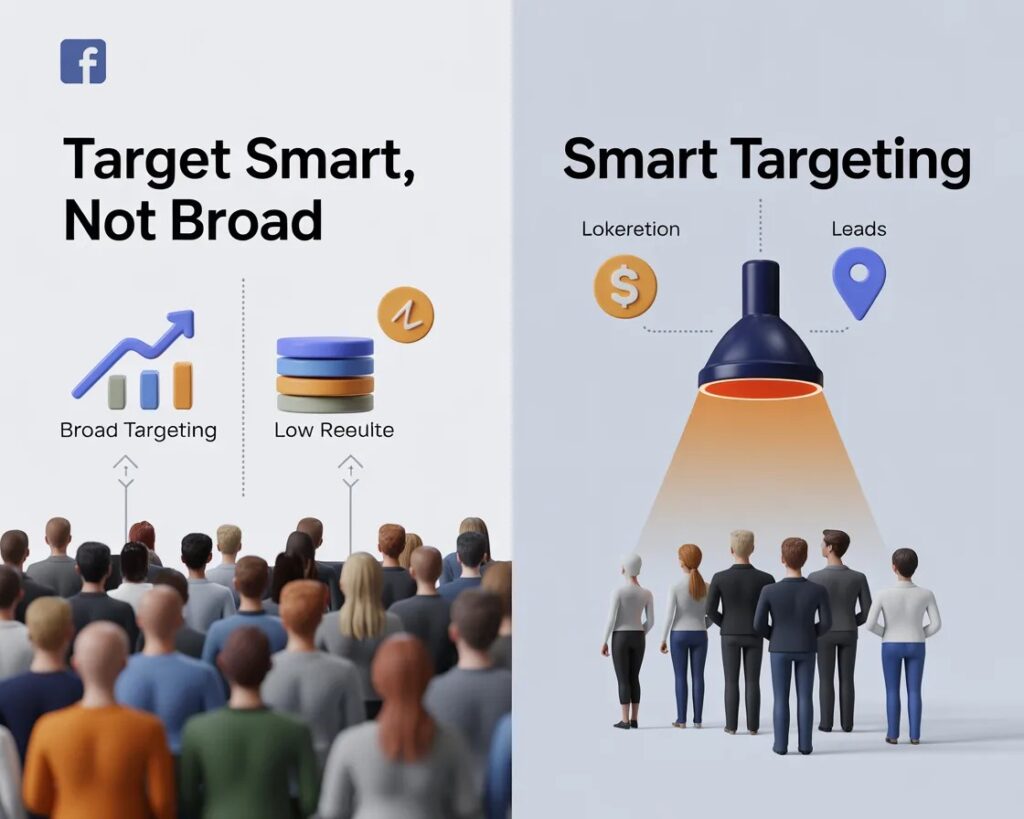
With a small Facebook ads budget, targeting matters more than ever.
Instead of targeting everyone, try:
- Narrow interest stacking (2–3 relevant interests)
- Location-based targeting (for local businesses)
- Lookalike audience (if you have 100+ past leads or customers)
Example:
If you run a fitness coaching service, instead of targeting “Fitness”, target:
- Fitness AND Weight Loss
- Engaged Shoppers
- Age 25–40
Smaller, relevant audiences = better conversion rate.
Step 3: Keep Campaign Structure Simple
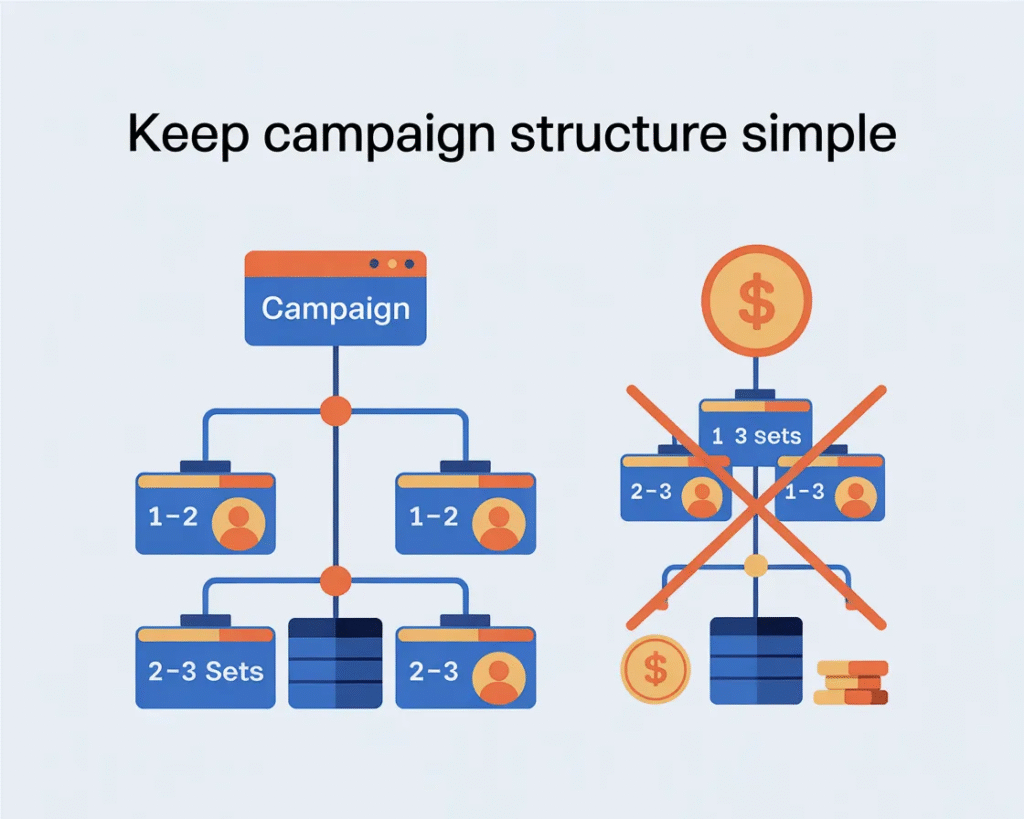
Here’s the best structure for Facebook ads for small business on a low budget:
- 1 Campaign
- 1–2 Ad Sets
- 2–3 Creatives per Ad Set
That’s it.
Don’t create 5 ad sets with $3 each. Facebook needs enough data to optimize.
Step 4: Focus 80% on Creative
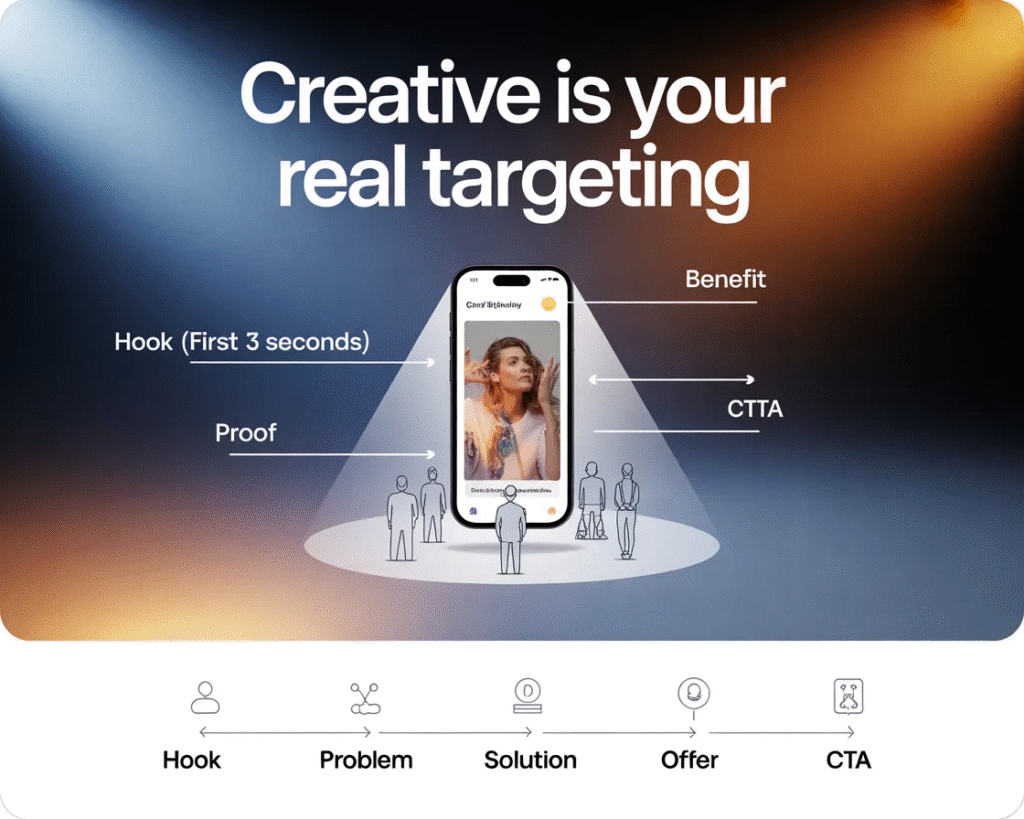
When budget is low, creative becomes your targeting.
Your ad must:
- Hook in the first 3 seconds
- Clearly state the benefit
- Show proof or results
- Have one strong CTA
Simple Creative Formula:
Hook → Problem → Solution → Offer → CTA
Example:
“Struggling to get local leads? We helped 3 salons generate 120+ bookings in 30 days. Book a free strategy call.”
That’s clean, clear, and conversion-focused.
Step 5: Use Retargeting (Even on Small Budget)
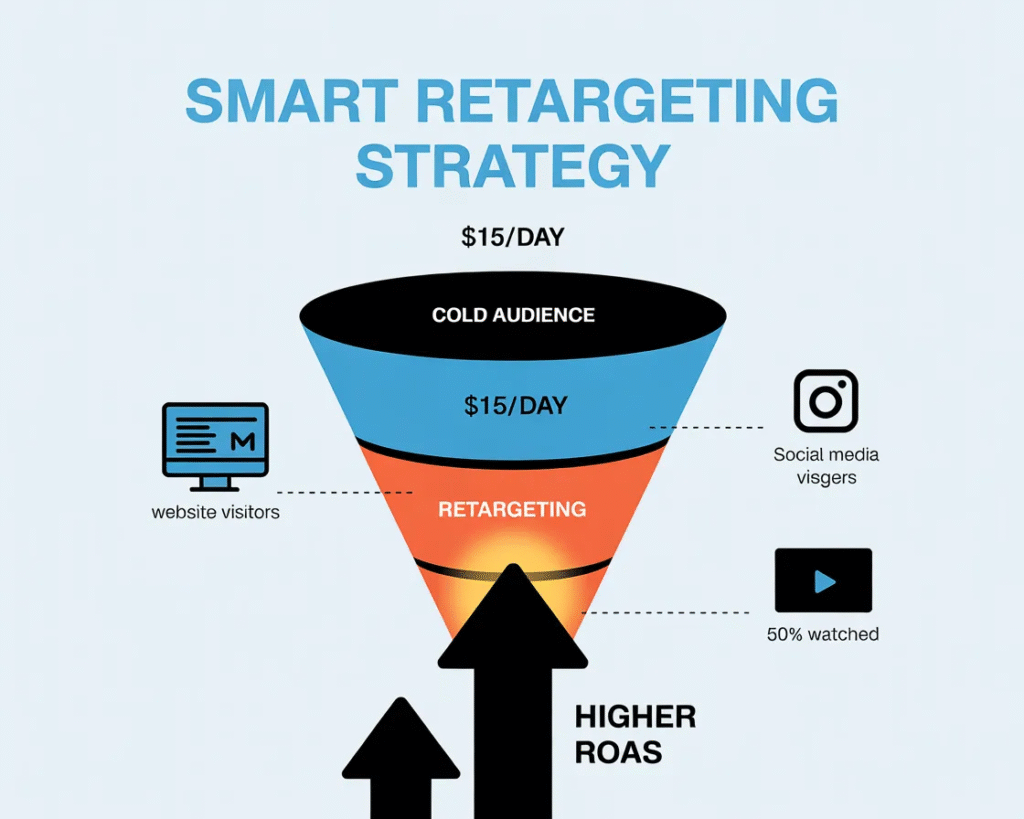
This is where most small businesses lose money.
If you’re spending $20/day:
- $15 → Cold audience
- $5 → Retargeting (website visitors, Instagram engagers, video viewers)
Retargeting ads are cheaper and convert higher.
You can retarget:
- Website visitors (last 30 days)
- Instagram page engagers
- Video viewers (50%+ watched)
Even a small retargeting budget improves ROAS.
Step 6: Track What Actually Matters
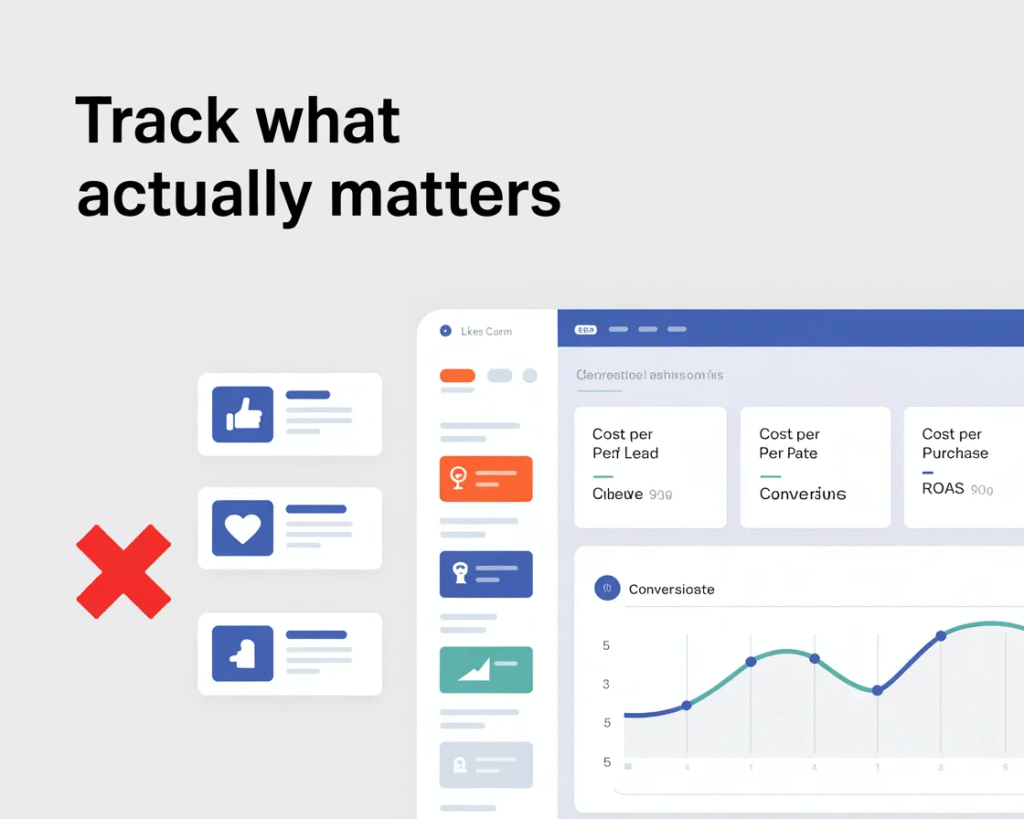
Don’t get distracted by:
- Likes
- Shares
- Comments
Focus on:
- Cost per lead
- Cost per purchase
- Conversion rate
- Return on ad spend (ROAS)
If your Facebook ads for small business budget is limited, every rupee/dollar must be tracked.
Realistic Expectations with $20/Day
Let’s be honest.
You won’t scale to $100k/month instantly.
But you can:
- Generate 3–10 leads per day (service business)
- Get consistent daily sales (small eCommerce brand)
- Test offers and creatives affordably
The goal at this budget is:
Test → Learn → Optimize → Scale
Common Mistakes Small Businesses Make
- Changing ads every 2 days
- Targeting too many interests
- Not installing the Meta Pixel
- Ignoring landing page quality
- Running ads without clear offer
If your funnel is weak, ads won’t save you.
Bonus: Best Industries for Low Budget Facebook Ads
Running Facebook ads under $20/day works especially well for:
- Local salons
- Gyms
- Coaches
- Real estate agents
- Niche eCommerce brands
- Home service businesses
High-ticket service businesses often see the best ROI.
Final Thoughts
Running Facebook ads for small business on a low budget is completely possible — if you focus on:
- One goal
- One clear audience
- Strong creative
- Simple structure
- Consistent testing
Small budgets reward discipline.
If you’re just starting, don’t wait for a big marketing budget. Start lean, optimize smart, and scale once the numbers make sense.