In search engine optimization, even the smallest details matter. From title tags to internal links, every element plays a role in how your pages appear and perform in search results. That’s why it’s important to stay alert to changes in how Google displays your content.
Google frequently updates its algorithms, often without prior notice. One such change that many website owners have noticed is Google displaying the H1 heading instead of the meta title in search engine results pages (SERPs).
While this might seem like a minor adjustment, it can impact click-through rates and overall visibility. In this article, we’ll explain why Google does this and how you can increase the chances of your intended title tag being shown instead.
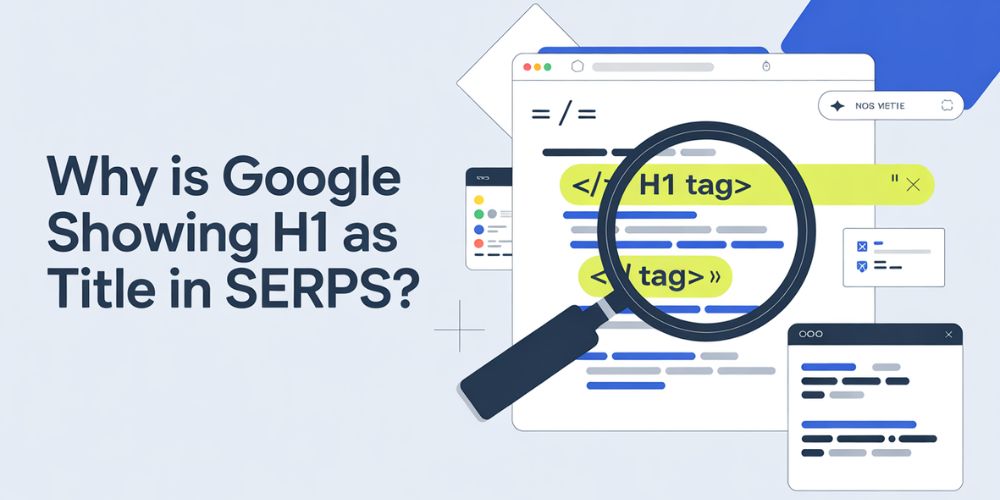
Why Is Google Showing H1 as the Title in SERPs?
Google’s primary goal is to provide the most relevant and useful information to users. If Google believes that your H1 heading better represents the page content than your meta title, it may replace the title tag with the H1 in SERPs.
This can also happen when:
- The meta title is missing or poorly optimized
- The title is too long, generic, or stuffed with keywords
- The title doesn’t accurately reflect the page content
Since Google makes these changes automatically, you may not notice them unless you regularly audit your pages. Without routine checks, your titles could be rewritten without your awareness.
How to Stop Google From Changing Your Title
Once you understand why this happens, you can take steps to reduce the chances of Google replacing your title tag. Below are five effective ways to keep your meta titles intact.
Create a Custom SEO Title for Every Page
Managing SEO for a large website can be challenging, but skipping meta titles makes it more likely that Google will fall back on your H1.
Most content management systems allow you to add a custom SEO title for each page. Many SEO plugins also provide optimization indicators to show whether your title length and keyword usage are appropriate. For example, tools like Yoast SEO use color-coded signals to help you assess title quality.
Write Unique and Descriptive Titles
Reusing the same title across multiple pages might save time, but it increases the risk of Google rewriting your titles.
Each page should have a unique, descriptive title that clearly reflects its content and targets a single primary keyword. SEO tools can help you quickly verify whether your title is optimized.
Well-written titles also improve user experience by helping searchers understand what the page offers before clicking, increasing the likelihood of relevant traffic.
Keep Title Length Within Display Limits
Meta titles should strike a balance—they shouldn’t be too short or too long. Very short titles may appear vague, while overly long ones get truncated in SERPs.
When titles are cut off, users may struggle to understand the page context, and Google may choose to rewrite them. A good rule of thumb is to keep titles around 55–60 characters, or roughly 8–10 words, depending on character width.
Avoid Clickbait Titles
Clickbait titles may attract attention, but they often fail to deliver on their promise. This leads to poor user experience and can trigger Google to replace the title with something more accurate.
Your title should be engaging, but it must also reflect the actual content of the page. Authentic, relevant titles are more likely to remain unchanged in search results.
Don’t Keyword-Stuff Your Titles
Including multiple keywords in a single title can make it confusing and less effective. Ideally, each meta title should focus on one primary keyword that matches the page intent.
Keyword stuffing not only hurts readability but can also signal manipulative practices to search engines. In such cases, Google may rewrite your title to improve clarity and relevance.
Why Should the Meta Title Be Shown as the SERP Title?
Take a look at your H1 headings—are they always clear and descriptive, or are some generic or vague?
Meta titles give you greater control over how your page appears in SERPs. When Google replaces them with H1s, users may not get a clear idea of what to expect, which can negatively affect click-through rates and traffic.
A well-crafted meta title ensures consistency, clarity, and better alignment with user intent.
Get Help With Your SEO
SEO involves many moving parts, and keeping up with constant changes can be overwhelming. If you want to improve your rankings and maintain control over how your pages appear in search results, professional guidance can make a real difference.
Get in touch with us today to learn how we can help strengthen your SEO strategy and improve your visibility on SERPs.