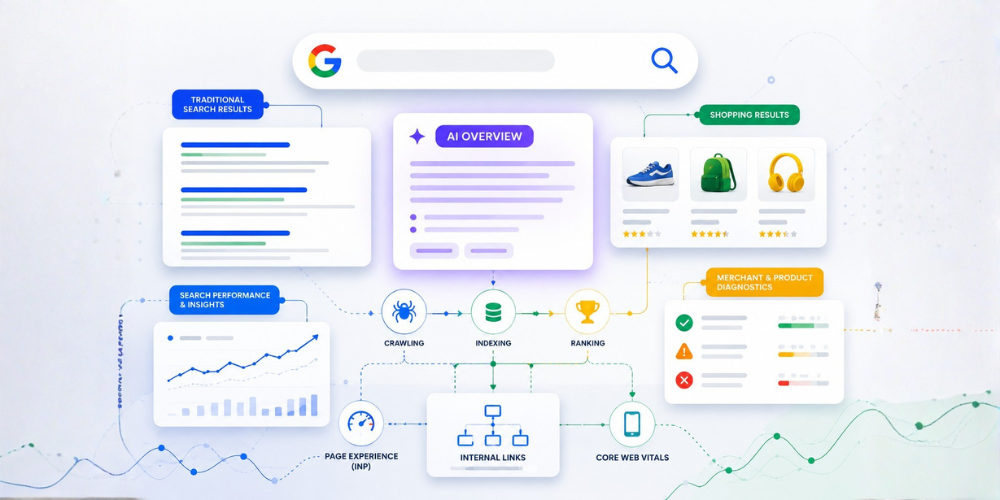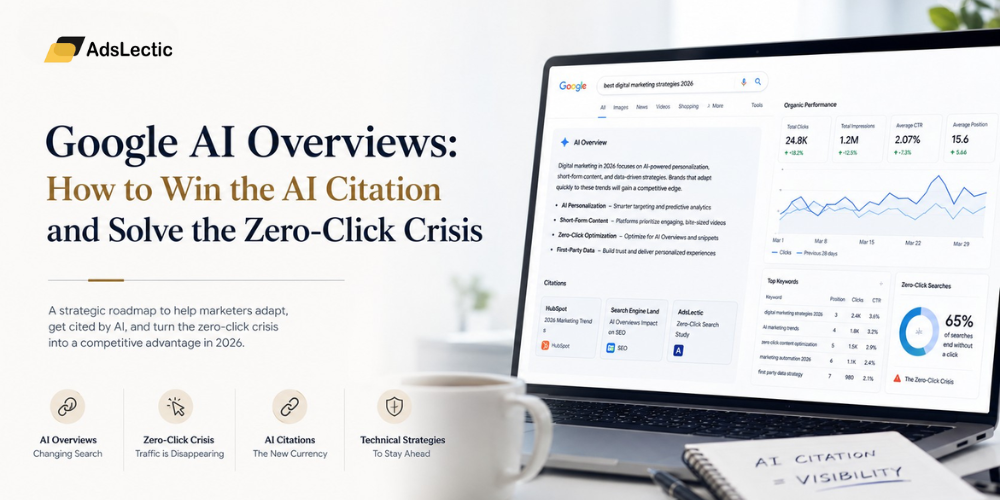
The digital marketing landscape is currently navigating its most volatile shift since the transition to mobile-first indexing. If you have monitored your search results recently, you’ve witnessed the transformation: a massive, holographic-styled interactive box at the top of the SERP providing a synthesized answer before a user even considers scrolling.
This is Google AI Overviews (the evolution of SGE). While it provides a frictionless experience for users, it has sent shockwaves through the industry, triggering what we call the Zero-Click Crisis. When Google’s Gemini-powered engine summarizes your multi-thousand-word guide into three bullet points, the incentive for a user to visit your site vanishes.
At AdsLectic, we don’t view this as the “SEO Apocalypse.” Instead, we view it as the transition from “Keyword Matching” to Search Intelligence. Here is your comprehensive, technical roadmap to surviving the zero-click era and dominating the AI Citation landscape in 2026.
1. The Anatomy of the Zero-Click Crisis
By mid-2026, data suggests that Zero-click searches account for nearly 52% of all desktop queries and over 65% of mobile searches. Google has effectively pivoted from being a “Connector” to an “Aggregator.”
Why your traffic is dropping:
- The “Good Enough” Answer: AI Overviews often provide just enough information to satisfy a user’s immediate curiosity (e.g., “What are the benefits of Native Ads?”).
- Screen Real Estate: AI boxes now occupy the top 800 pixels of a mobile screen, pushing traditional organic results “below the fold.”
- Aggressive Summarization: Google is increasingly using NLP (Natural Language Processing) to distill complex guides into simple checklists.
The AdsLectic Perspective: If you are playing the old SEO game of “ranking for information,” you are losing. You must now rank for Expertise.
2. Winning the “AI Citation”: The New Currency of Search
In the AI-driven SERP, a “Blue Link” click is a secondary goal. Your primary goal is the Citation Link—those small, card-style references found within the AI Overview.
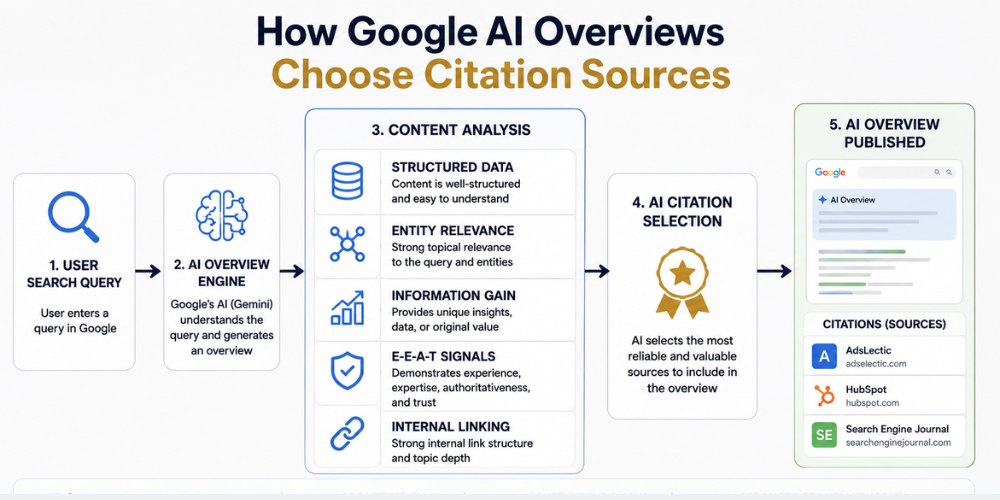
Why Citations are better than standard clicks:
When Google’s AI cites AdsLectic, it acts as a Pre-Vetting Mechanism. The user isn’t just clicking a link; they are clicking a trusted source that the world’s most powerful AI just recommended. This leads to higher conversion rates and lower bounce rates.
Tactical Strategy: The “Information Gain” Framework
Google’s Gemini model prioritizes content that offers Information Gain. This means if your blog post just repeats what 10 other sites say, the AI will ignore you. To win the citation, you need:
- Proprietary Data: Include “According to AdsLectic internal campaign data…”
- Unique Perspectives: Don’t just list “SEO Tips”; provide a “Counter-Intuitive SEO Strategy for 2026.”
- The “Direct-Response” Formatting: Use the 40-Word Rule. Answer the core question of your section in the first 40 words, then use the rest of the section to explain the “Why.” AI loves to scrape these 40-word summaries.
3. Technical Mastery: Taking Back Control with data-nosnippet
This is where most agencies fail. They believe they are at the mercy of Google’s scraper. They aren’t.
If you have high-value, high-intent content (like a specific marketing formula or a rate card), you don’t want Google to give it away for free. You can use the data-nosnippet attribute to force a click.
How to Implement “Click-Bait” Legally:
By using the data-nosnippet tag, you allow Google to rank the page, but you “mask” the most valuable part from being shown in the AI summary. This creates a Curiosity Gap.
The Technical Implementation:
HTML
<section>
  <h2>Our 2026 Conversion Secret</h2>
  <p>To increase your ROAS, you first need to align your pixels with Gemini's API...</p>

  <div data-nosnippet>
    <p>The specific script we use involves a three-step JavaScript trigger that
    bypasses traditional ad-blockers. [Click here to see the full code].</p>
  </div>
</section>
Strategic Use Case: Apply this to the “Conclusion” or “Step-by-Step” instructions of your guides. The AI will summarize the introduction, realize the solution is restricted, and provide a citation link so the user can find the answer on your site.
4. Generative Engine Optimization (GEO) vs. Traditional SEO
While we’ve covered the basics in our GEO Guide, it is important to understand the hierarchy of 2026 search:
| Feature | Traditional SEO | GEO (AI SEO) |
| Primary Goal | Ranking #1 | Winning the AI Citation |
| Metric | Keyword Density | Entity Salience |
| Value | Page Views | Brand Mentions within AI |
| Strategy | Backlink Building | Information Gain & E-E-A-T |
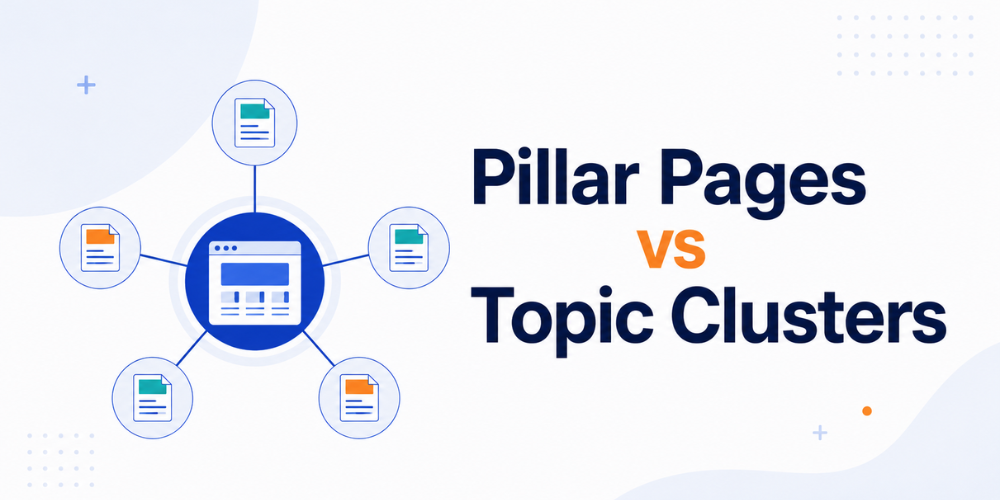
To win in this environment, your internal linking must be flawless. Ensure your “Crisis” blog links to technical pillars, such as your analysis on why Google shows H1 as titles, which helps the AI understand your site’s hierarchy.
5. Your 2026 AI SEO Strategy Checklist
Before you hit “Publish,” run your content through the AdsLectic AI-Readiness Audit:
- [ ] Entity Alignment: Does the post mention your brand name (“AdsLectic”) in close proximity to the target keywords?
- [ ] Structured Data Injection: Are you using
FAQSchemaorHowToschema to guide the AI’s summary engine? - [ ] Sentiment Analysis: Is your tone authoritative? AI models prefer “Confident” and “Declarative” language over passive voice.
- [ ] Link Health: Have you audited your inbound links? AI considers the quality of who cites you before it cites you to a user.
Frequently Asked Questions (FAQ)
Featured Snippets usually pull a direct quote from one site. AI Overviews synthesize information from multiple sources into a single, cohesive answer. This makes “Information Gain” even more important to ensure you are one of the sources chosen.
No. Google uses the content for “understanding” and “ranking.” It only limits the “display.” Think of it like a movie trailer: you show enough to get them interested, but you save the best parts for the theater (your website).
In 2026, these overviews are updated in near real-time. If a new marketing trend breaks, the AI can incorporate new sources within hours. This is why “Freshness” is now a top-tier SEO signal.
You can use the nosnippet meta tag, but we don’t recommend it. It’s better to use data-nosnippet on specific sections so you can still win citations while protecting your most valuable “click-triggering” content.
Conclusion: Turning the AI Crisis into a Competitive Moat
The rise of Google AI Overviews isn’t the death of SEO—it’s the death of lazy content. If your website only exists to repeat facts that an AI can summarize in three seconds, your traffic will continue to bleed. However, if you position your brand as an Entity of Authority, Google’s AI shifts from being your competitor to being your most powerful referral engine.
By implementing the “Information Gain” framework and using technical safeguards like data-nosnippet, you aren’t just surviving the Zero-Click Crisis; you are thriving in it. You are forcing Google to acknowledge your expertise while protecting the proprietary insights that drive your business.
At AdsLectic, we specialize in navigating these technical shifts. The future of search belongs to those who provide the data the AI needs and the expert human perspective it can’t replicate. Don’t wait for your CTR to hit zero—start optimizing for the citation age today.