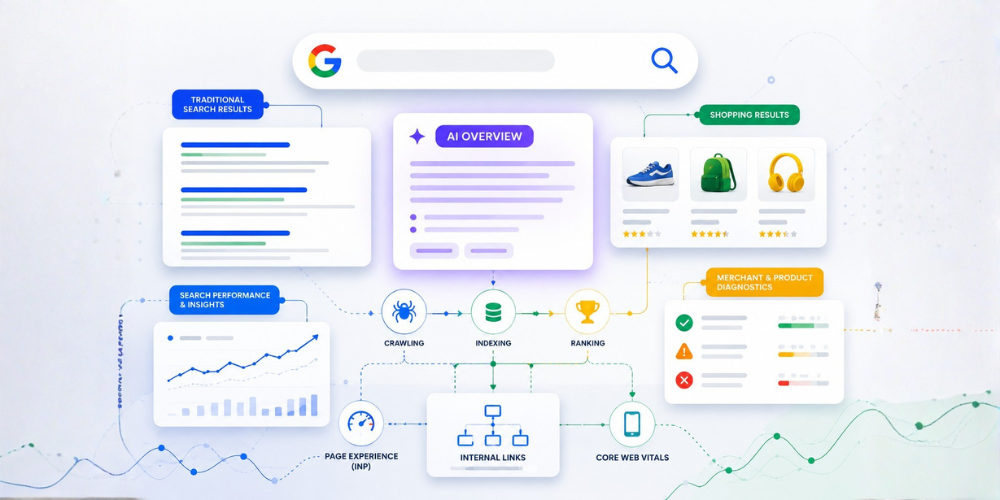
The digital marketing landscape is currently at a critical inflection point. For decades, visibility was defined by the “ten blue links” of Google. In 2026, however, traditional search engine volume is projected to drop by 25% as users increasingly turn to AI chatbots and virtual agents for direct, synthesized answers.
Brands that want to stay visible must adopt proven content growth strategies used by successful blogs to adapt to this shift. As a Dehradun-based agency built on the collective expertise of veterans from global tech giants like Google and Microsoft, AdsLectic is uniquely positioned to help brands navigate this shift from Search Engine Optimization (SEO) to Generative Engine Optimization (GEO). This guide provides a strategic blueprint for maintaining visibility in an era where being “part of the answer” is the only way to survive.
Table of Contents
- What Is Generative Engine Optimization (GEO)?
- Why Traditional SEO Is Declining in 2026
- Core GEO Strategy Pillars
- Answer-First Content Structure
- Fact-Dense Content for AI Citation Optimization
- Building Topical Authority
- Technical SEO for GEO (Schema & AI Readability)
- How to Measure GEO Success (Share of Answer)
- Frequently Asked Questions (FAQs)
What is Generative Engine Optimization (GEO)?
| Category | Traditional SEO | Generative Engine Optimization (GEO) |
|---|---|---|
| Information Processing | Ranks pages by authority and relevance | Synthesizes answers from multiple credible sources |
| Result Format | Displays a list of clickable links | Delivers one complete, conversational answer |
| Primary Goal | High organic ranking and click-through rate (CTR) | Inclusion and citation within AI-generated summaries |
| Success Metric | Position #1, #2, or #3 | Share of Answer (SoA) and Citation Frequency 3 |
Generative Engine Optimization (GEO) is the practice of tailoring content so it can be understood, trusted, and cited by AI systems like ChatGPT, Claude, Perplexity, and Google’s AI Overviews. Unlike traditional SEO, which chases high-ranking positions on a results page, GEO focuses on ensuring that Large Language Models (LLMs) recognize your brand’s value and incorporate it into their synthesized responses.
Why Traditional SEO Is Declining in 2026 (Zero-Click Search Era)
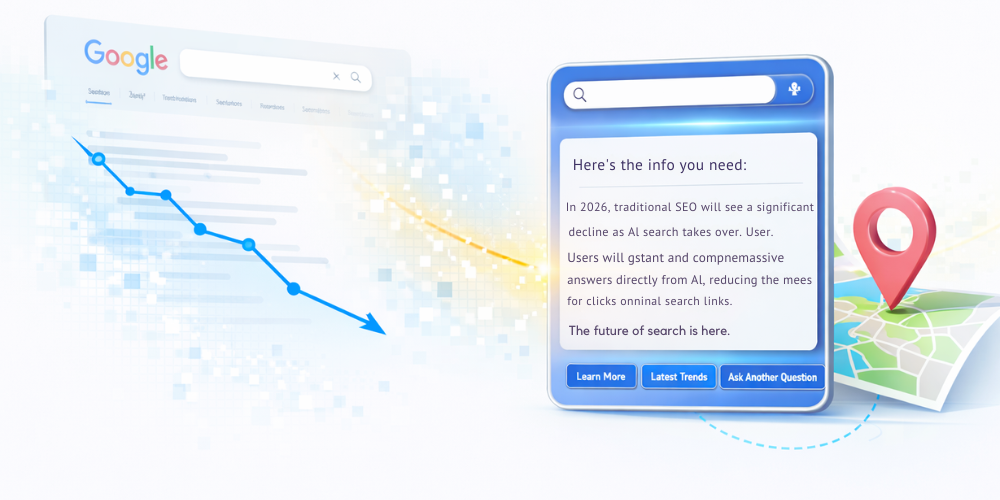
By early 2026, data revealed that over 60% of all Google searches and 77% of mobile searches were resulting in “zero-clicks”. This means that for the majority of queries, users receive the information they need directly from the AI Overview without ever visiting a website.
In this environment, brands cited in fewer than 30% of relevant AI responses are effectively invisible to their category. LLMs typically cite only 2 to 7 sources per answer, making the competition for these citation slots significantly fiercer than the battle for the traditional front page.
Core GEO Strategy Pillars for Ranking in AI Search Engines
To win a “Share of Answer,” content must be designed for extraction. AI engines prioritize structured, succinct, and fact-heavy content over the long-form “filler” often used in legacy SEO.
1. Answer-First Content Structure for AI Search
AI models are designed to deliver quick, summarized information. To increase your citation rate, use an “answer-first” structure: start every section with a concise summary (40-60 words) that directly addresses the query. Research shows that front-loading direct answers increases the probability of being cited in AI results significantly.
Structuring content properly with clear headings, especially using H1 tags in SEO, helps AI systems better understand and extract key information.
2. Fact-Dense Content for AI Citation Optimization
AI models love quantifiable specifics. To stand out, content should include a statistic, verifiable fact, or data point at least every 150-200 words. These act as “factual anchors” that AI can easily latch onto. Original research, industry surveys, and exclusive data studies are especially high-value, as AI systems prefer to cite unique, primary sources over generic consensus.
3. Building Topical Authority for AI Search Visibility
AI systems prioritize depth of coverage over specific keyword phrases. Instead of planning content around keyword lists, brands should plan around “intent chains”—answering the obvious question, followed by the next three logical follow-up questions. This signals to the AI that your domain “owns” the topic comprehensively. To build strong topical authority, you must also understand how to perform keyword research for SEO and map content around user intent.
Technical SEO for GEO: Schema, Structured Data & AI Readability
Technical SEO in 2026 is about “plumbing” that helps your work travel across AI surfaces. Along with technical optimization, building authority through high-quality backlinks remains critical for improving trust signals across AI systems.
- Schema Markup as a Trust Signal: Use robust schema tags (FAQ, How-To, Organization, and Product schema) to explicitly define your brand’s architecture for the machines.
- Structured Data: Schema allows you to explicitly state your founders, prices, logo, and address, helping AI engines verify your “Entity Authority”.
- Retrieval-Augmented Generation (RAG) Optimization: Ground your content in up-to-date sources. Systems using RAG rely on pulling fresh evidence at query time to reduce the risk of “hallucinations”.
How to Measure GEO Success: Share of Answer (SoA) Metrics
In the GEO era, we must move beyond tracking clicks to measuring Share of Answer (SoA)—the percentage of AI-generated responses for relevant queries that mention or cite your brand.
Key Metrics to Track:
- AI Brand Mention Rate: How often AI mentions your brand by name.
- Citation Frequency: How many times your domain is cited across a batch of tested AI prompts.
- Semantic Density Score: Whether your content uses the specific entities and language that AI models associate with your topic.
Top GEO Tracking Tools for 2026:
- Peec.ai: Best for teams starting SoV tracking and comparing share vs. competitors.
- Profound: Built for enterprise-scale intelligence across the AI discovery ecosystem.
- Otterly.ai: Provides visibility monitoring and audits specifically for ChatGPT, Perplexity, and Google AI Overviews.
Frequently Asked Questions About GEO and AI Search
Q: Is traditional SEO dead?
A: No, but it has evolved. SEO remains foundational for traditional search results, but GEO is now required to capture the 70% of the modern search funnel that favors AI-synthesized answers.
Q: Does using AI to write content hurt my GEO rankings?
A: Not inherently, but AI systems reward “Information Gain.” If your content simply repeats what is already in the training data, it will be suppressed. Original research and unique perspectives are the keys to staying citable.
Q: How many citations does an AI answer typically include?
A: Most Large Language Models (LLMs) cite only 2 to 7 sources per answer. To be included, your content must demonstrate higher authority and factual density than your competitors.
Q: What is “Search Everywhere Optimization”?
A: It is the strategy of being discoverable across all platforms where users search—including TikTok, Reddit, YouTube, and ChatGPT—rather than focusing solely on Google.
Conclusion: Partner with AdsLectic for the GEO Future
The shift from traditional search to generative engines is not just an algorithm update—it is a complete change in how visibility works online. Brands that adapt early to Generative Engine Optimization (GEO) will not only maintain visibility but will actively shape how AI systems describe their industry.
To succeed in this new landscape, focus on three priorities: building answer-first content, increasing factual density, and strengthening your brand’s topical authority across platforms and formats.
At AdsLectic, we combine deep technical expertise from global platforms like Google and Microsoft with a performance-driven content strategy to ensure your brand is consistently represented in AI-generated answers—not just indexed in search results.
If you’re ready to future-proof your visibility, now is the time to audit your content for GEO readiness and start building for the next era of search.
![Hindi SEO Guide 2026: SEO Kya Hai, SEO Kaise Kare and How to Rank in Hindi Suggested slug: /hindi-seo-guide/ Meta title: Hindi SEO Guide 2026: SEO Kya Hai & SEO Kaise Kare Meta description: Hindi SEO guide: learn seo kya hai, seo kaise kare, Hindi keyword research, on page and off page SEO, and how to rank in Google AI Mode in Hindi. Primary keyword: hindi seo Secondary keywords: seo for hindi website, hindi keyword research, seo kaise kare, seo kya hai, seo ka matlab, ai mode kya hai, google ai mode hindi Publishing notes (delete before going live): add one real client example where marked [ADD], and adjust the two Adslectic call-to-action lines to match what your SEO page actually offers. Hindi SEO means optimizing your website, blog or landing pages so they rank when people search Google in Hindi, Hinglish or a mix of both. If you have ever typed 'seo kya hai' or 'seo kaise kare' into Google, you have already done the kind of search this guide is about. Many Indian business websites are still English-only, even though a large part of their audience searches in Hindi. That gap is an opportunity. In this guide you will learn what SEO is in simple Hindi, how Hindi keyword research works, how to handle on-page, off-page and local SEO for a Hindi website, and how to show up in Google AI Mode answers in Hindi. SEO Kya Hai? (SEO Ka Matlab and Meaning in Hindi) SEO का मतलब है Search Engine Optimization (सर्च इंजन ऑप्टिमाइज़ेशन)। आसान शब्दों में, SEO वह तरीका है जिससे आपकी वेबसाइट या ब्लॉग Google जैसे सर्च इंजन में ऊपर दिखती है, ताकि सही लोग आपको आसानी से ढूंढ सकें। In simple terms, SEO is the process of making your website easy for search engines to understand and useful for the people searching. Whether someone asks 'seo kya hota hai' or looks up 'seo meaning in hindi', the answer is the same: SEO helps the right visitors find your pages without you paying for every click. SEO has three main parts: • On-page SEO: what you do on the page itself, such as content, titles, headings and images. • Off-page SEO: what happens outside your site, mainly backlinks and brand mentions. • Technical SEO: how fast, mobile-friendly and crawlable your site is. Hindi SEO applies all three to Hindi-language content. Why Hindi SEO Matters in 2026 • India had about 886 million active internet users in 2024, and rural India made up 55% of them, according to the IAMAI-Kantar Internet in India report. • The same report found that 98% of users access content in Indic languages, and 57% of urban users prefer regional-language content. • Google launched AI Mode in Hindi in September 2025, then added seven more Indian languages and Search Live in October 2025. • Google has said that AI Mode users globally ask questions nearly three times longer than in traditional search, which favours content written to answer full questions. In many niches there are fewer well-optimized Hindi pages than English ones, so a well-built Hindi page has more room to rank. [ADD: one line from a real Adslectic campaign in a Hindi-speaking or Tier 2 market, such as an EdTech or travel client.] Hindi SEO Kaise Kare? Start With the Three Ways People Search Hindi searchers do not all use one script. Plan for three: Search style Example Where to use it Devanagari एसईओ क्या है Dedicated Hindi pages, titles and headings Hinglish (Hindi in Roman letters) seo kaise kare FAQs, subheadings and body text, including on English pages Mixed best मोबाइल under 10000 Product and comparison pages Google treats these as related but different queries, so a page written in only one script can miss the other audience. For every core topic, build three keyword clusters: English, Devanagari and Hinglish. Hindi Keyword Research Kaise Kare? Keyword research kya hai? It is the process of finding the words and questions your audience actually types into Google. For a Hindi website it works the same way, except the data is patchier, so you should use more than one source. 1. Start from your English topic list and write the Hindi, Hinglish and mixed versions of each term. 2. Check Google Keyword Planner. Keyword Planner kya hai? It is Google's free planning tool inside Google Ads that shows search volume ranges and keyword ideas. Set the location to India and test your terms under both Hindi and English language settings. 3. Mine Google Search Console. Filter your existing queries for Hindi characters and words like kaise, kya and kitna to see what real users already type. 4. Use Google autosuggest and People Also Ask. Type the Hindi and Hinglish version of your topic and note the suggestions and questions. 5. Look at the top 10 results. If most pages ranking for a Hindi query are thin or English-only, you have room to compete. A hindi keyword research tool or keyword research tool in Hindi can speed this up, but check its numbers against Search Console, because Hindi volumes are often underreported or missing in tools. Treat volume ranges as direction, not exact numbers. A term showing 10 to 100 monthly searches can still bring valuable visitors, and many small terms add up when one well-built page covers them together. That is why this guide also answers questions like on page seo kya hai, off page seo kya hai and backlink kya hai in one place. For the fundamentals, see our keyword research tips. On-Page SEO Kya Hai? Hindi Website Par Kaise Kare On-page SEO kya hai? It is the work of optimizing the content and HTML of each page so search engines and readers understand it. For a Hindi website, focus on these points: • Title and meta description: write them in the page language, with the main keyword near the start. Aim for roughly 60 characters for the title and 155 for the description, and check the preview, because Devanagari takes more space than Latin letters. • H1 and headings: use one H1 with your main keyword and question-style H2s such as 'Hindi SEO kaise kare?'. Our guide on the H1 tag in SEO explains why this matters. • URL slugs: short Roman-letter slugs such as /hindi-seo-guide/ are easy to read and share. Pick one style and stay consistent. • Language setup: give Hindi pages their own indexable URLs, set the page language to Hindi, and use hreflang to connect Hindi and English versions of the same page. See our international SEO best practices. • Write natively: write Hindi content for Hindi readers instead of running English text through a translator. Translated phrasing rarely matches how people actually search. • Image SEO kaise kare: use descriptive file names, write alt text in the page language, and compress images so pages load fast. • Keyword density kya hai: it is the share of a page made up by a keyword. There is no magic percentage. Use your main keyword in the title, the first paragraph and a few headings, then write naturally. • Schema markup: add Article, FAQPage and BreadcrumbList schema to your posts. Our schema markup guide shows how. Doing this across dozens of pages takes time and consistency. If you would rather have a team plan and run it with you, take a look at our SEO services to see how we approach search for growing businesses. Technical SEO and Mobile SEO Kya Hai? Mobile SEO kya hai? It means making sure your pages load quickly, read clearly and work well on phones, because a large share of Indian users browse on mobile. For Hindi pages, check these basics: • Use a Devanagari font that renders cleanly on all devices and loads quickly, so characters never appear broken. • Keep pages light, and compress images and scripts. See our core web vitals guide. • Make sure Hindi pages are crawlable, included in your sitemap and indexed. • Run a regular check using our technical SEO audit checklist. Off-Page SEO Kya Hai? Backlink Kya Hota Hai? Backlink kya hai? A backlink is a link from another website to yours. Search engines treat good links as a sign of trust. Off-page SEO kya hota hai? It is everything you do outside your own site to build that trust, including backlinks, brand mentions, directory listings, social profiles and video. For Hindi SEO, these off-page steps work best: • Earn links and mentions from Hindi publications, regional blogs and relevant business directories. • Publish Hindi videos on YouTube with Hindi titles and a clear description linking back to your page. • Take part in Hindi discussions on forums and Q&A sites as a real person, not by dropping links. • Keep your business name, description and contact details consistent everywhere they appear. Quality matters more than quantity. A few relevant links beat hundreds of low-quality directory or bookmarking links, and Google's spam systems are built to catch manipulative link tactics. At Adslectic, we treat off-page SEO as brand building first and link building second. To find your own link opportunities, read our guide on how to find inbound links. Local SEO Kya Hai? Local SEO kya hai? It is optimizing your business to appear for searches with local intent, such as a service plus a city name or 'near me'. Complete your Google Business Profile, keep your name, address and phone number consistent, collect genuine reviews, and use local phrases in Hindi and Hinglish on your service pages. For a regional example, see our digital marketing guide for Delhi NCR. Blog Ka SEO Kaise Kare? (Blogger and WordPress) Blog seo kaise kare is one of the most common Hindi SEO questions. These steps apply whether you use Blogger or WordPress: 1. Pick one main keyword per post and use it in the title, H1 and first paragraph. 2. Use clear H2 headings, many of them as questions your readers ask. 3. Link to related posts on your own blog. 4. Add alt text to images, in the same language as the post. 5. Add your blog to Google Search Console and submit your sitemap. Our Search Console guide covers what to track once you are set up. 6. Update old posts instead of letting them go stale. If your posts are live but traffic is flat, read why blog posts are not getting traffic. Black Hat SEO Kya Hai? Black hat SEO kya hai? These are tactics that break Google's spam policies, such as hidden text, cloaking, auto-generated spam content and link schemes. They may give short-term gains, but they risk losing your rankings entirely. Google rolls out spam updates regularly, and the latest one began on 24 September 2026. Stick to useful content and honest link building, and read our guide to recovering from the March 2026 spam update if you have seen a traffic drop. AI Mode Kya Hai? Google AI Mode Hindi Me Kaise Rank Kare AI Mode kya hai? It is a tab in Google Search that gives AI-generated answers to longer, more complex questions and lets people ask follow-ups by text, voice or image. Google launched it in Hindi in September 2025. In October 2025 it added Bengali, Kannada, Malayalam, Marathi, Tamil, Telugu and Urdu, along with Search Live in English and Hindi. Google has said that the same foundational SEO practices apply to its AI search features, so good SEO is still the base. To improve your chances of being cited in Google AI Mode in Hindi: • Answer first. Put a clear two or three line answer directly under each heading, then expand. • Use question headings in natural Hindi and Hinglish, such as 'AI Mode kya hai?'. • Add specifics: city names, prices in rupees, steps, examples and real numbers. • Keep your brand details consistent across your website, profiles and listings so your business is easy to verify. • Add FAQ schema and keep the page crawlable and indexable. For the wider picture, read our generative engine optimization guide and our explainer on AI Overviews. How to Measure Hindi SEO Results • In Search Console, filter by the page folder or URLs of your Hindi content, and use a query filter for Hindi characters and Hinglish words like kaise and kya. • Compare impressions, clicks and click-through rate for Hindi pages against your English pages. • Track leads and conversions from Hindi landing pages, not only traffic. Our GA4 SEO reporting dashboard guide shows how to set this up. • Review monthly. Hindi queries often grow slowly before they compound. Common Hindi SEO Mistakes 1. Machine-translating English pages and publishing them unchanged. 2. Optimizing only for Devanagari and ignoring Hinglish, or the reverse. 3. Trusting one keyword tool and skipping a keyword because it shows low or no volume. 4. Mixing languages on a page with no clear structure. 5. Ignoring mobile speed on Devanagari pages. 6. Reporting Hindi results inside the same totals as English. Hindi SEO Ka 30-Day Starter Plan Week What to do 1 Pull Hindi and Hinglish queries from Search Console and build three keyword clusters for your top three services 2 Publish two native Hindi pages with correct language settings, schema and clean slugs 3 Add Hinglish FAQs to your best-performing English pages 4 Set up a separate Hindi report in Search Console and GA4, then review what is ranking FAQs SEO kya hai? SEO ka matlab hai Search Engine Optimization, the process of improving your website so it ranks higher in search results and attracts the right visitors. Hindi SEO kaise kare? Research Hindi, Hinglish and mixed keywords, write native Hindi content, set up page language and hreflang correctly, build quality links, and track Hindi pages separately. Kya Hindi SEO English SEO se alag hai? The fundamentals are the same. The differences are handling more than one script, patchier keyword data and a mostly mobile audience. Hindi keyword research kaise kare? Combine Google Keyword Planner, Search Console queries, autosuggest and People Also Ask, and check the top results for each term. On-page SEO kya hai aur off-page SEO kya hai? On-page SEO is what you optimize on your pages. Off-page SEO is what builds your authority elsewhere, mainly backlinks and brand mentions. Backlink kya hota hai? A backlink is a link from another website to yours, and quality, relevant backlinks help build trust with search engines. Kya Google AI Mode Hindi me kaam karta hai? Yes. Google launched AI Mode in Hindi in September 2025 and has added more Indian languages since. Kya mujhe alag Hindi website chahiye? No. A Hindi section on your existing domain, with its own URLs and hreflang, is usually enough. Conclusion Hindi SEO is not about translating your English site. It is about understanding how Hindi and Hinglish searchers actually look for answers, then building pages, links and measurement around that. Start with one service, build the three keyword clusters, publish a few native Hindi pages and track them on their own. [ADD: closing line inviting readers to get in touch.] Sources • IAMAI-Kantar Internet in India Report 2024, via The Tech Panda • Google India: AI Mode now in Hindi • Google India: New languages in AI Mode and Search Live • TechCrunch: Search Live and AI Mode languages in India • Search Engine Land: Google algorithm updates](https://adslectic.com/wp-content/uploads/2026/10/seo-hindi-banner.png)